SEO focuses on improving a website’s visibility in search results, while technical SEO improves the site’s structure, speed, crawlability, and indexing performance. Business owners often pour money into content, so naturally their site rankings should follow.
But when they don’t, the reason usually sits in the technical foundations of the site, rather than the content itself. At Matter Solutions, we’ve seen this across hundreds of sites, and the fix starts with understanding what SEO covers as a whole.
From that experience, this article walks you through:
- What the difference between SEO and technical SEO is
- The three pillars that influence how search engines read your site
- What on-page SEO, off-page SEO, and technical SEO each involve
Let’s start with a discussion about SEO vs. technical SEO.
What Is the Difference Between SEO and Technical SEO?
Technical SEO is a specific branch of SEO, rather than a separate practice entirely. In general, search engine optimization covers three distinct categories:
- On-page SEO
- Off-page SEO
- Technical SEO
Each one handles a different aspect of how your site performs in Google search. For instance, on-page SEO handles your content and structure, while off-page SEO builds your authority. Meanwhile, technical SEO makes sure search engines can access and read your site.
Think of them as two sides of the same coin: SEO sets the goal, and each of the three categories is one of the ways you get there.
Now, we’ll discuss more about these three types of SEO.
The Three Pillars of SEO You Need to Know
Most businesses focus on one part of SEO and wonder why results are slow. They don’t realise how much ground SEO covers until they try to rank a web page and hit a wall. Here’s a clearer understanding of each one.
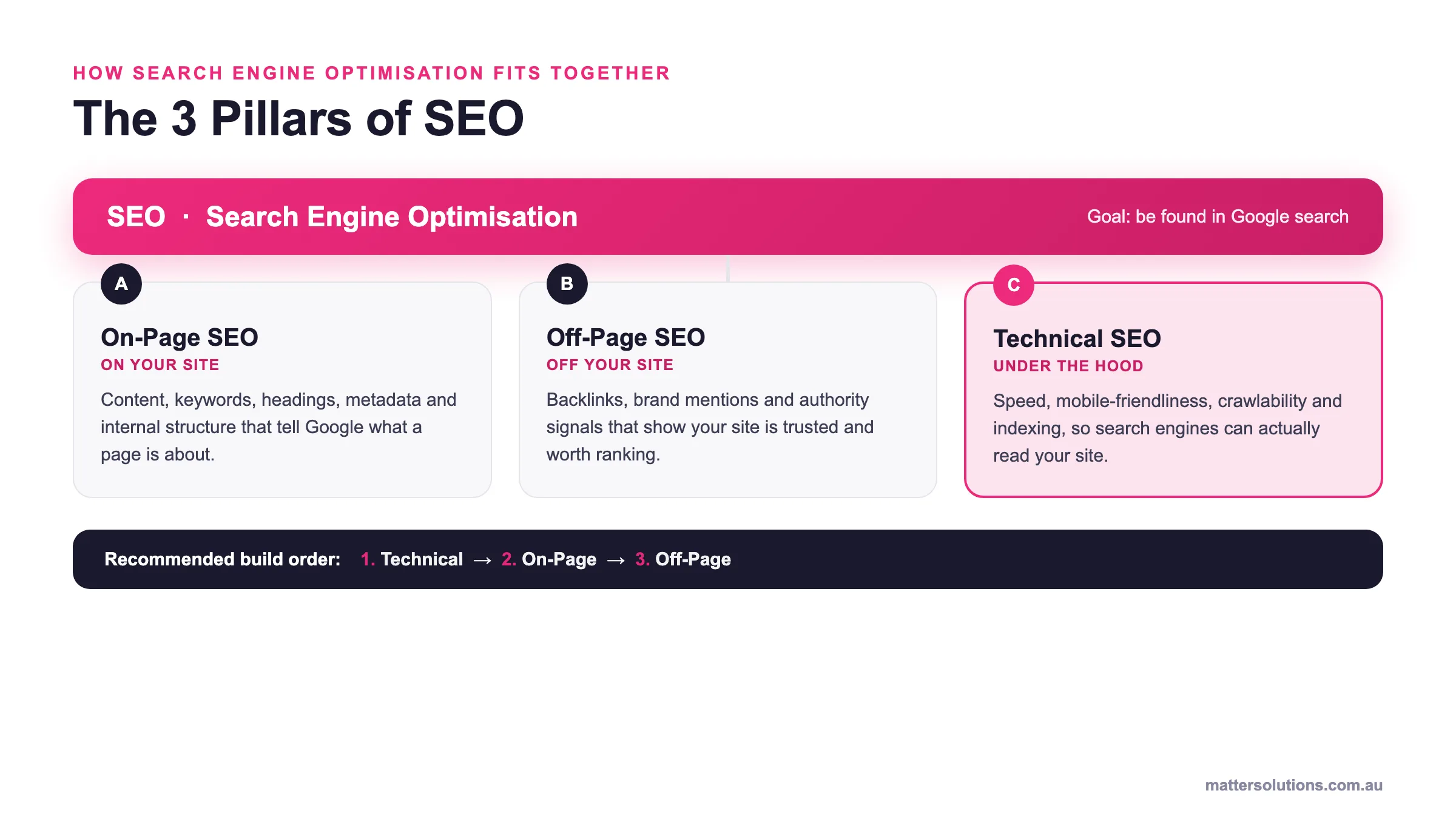
How search engine optimisation fits together
The 3 Pillars of SEO
On-Page SEO
On your site
Content, keywords, headings, metadata and internal structure that tell Google what a page is about.
Off-Page SEO
Off your site
Backlinks, brand mentions and authority signals that show your site is trusted and worth ranking.
Technical SEO
Under the hood
Speed, mobile-friendliness, crawlability and indexing, so search engines can actually read your site.
Recommended build order: 1. Technical → 2. On-Page → 3. Off-Page
The three pillars of SEO. Technical SEO is the foundation you build first.
| On-Page SEO | Off-Page SEO | Technical SEO | |
|---|---|---|---|
| What it optimises | Content, keywords, headings, metadata and internal links | Backlinks, brand mentions and authority signals | Speed, mobile-friendliness, crawlability, indexing and structured data |
| Where it happens | On your site | Off your site, across the web | Site infrastructure, under the hood |
| Example tasks | Title tags, meta descriptions, heading structure, keyword placement | Link building, digital PR, content marketing | Core Web Vitals, XML sitemaps, robots.txt, schema markup |
| Main goal | Tell Google what the page is about | Build authority and trust | Let Google crawl, read and index the site |
| Where to start | Second | Third | First, do this first |
On-Page SEO: Content, Keywords, and Structure
On-page SEO covers everything directly on your content, including your content, heading tags, metadata, and how your specific keywords are placed throughout. It’s the layer that tells search engines what your page is about, who it’s for, and the reason it deserves to rank.
Conversely, poor keyword placement, thin website content, or a messy on-page structure all send the wrong signals. If you get the on-page fundamentals right, you basically give every site page a real shot at appearing higher on search results.
Backlinks and Authority Signals: The Concept of Off-Page SEO
From our experience working with clients, in most cases, higher rankings follow a strong off-page presence. This type of SEO works entirely outside your site, yet it directly influences how much authority your pages carry in search engine results.
Off-page signals like backlinks from reputable sites, brand mentions, and third-party coverage all tell search engines that your site is a trustworthy source worth ranking.
The volume and quality of those backlinks are important too. Say, ten links from high-authority domains will improve your performance more effectively than 100 from low-quality ones.
Technical SEO: The Engine Running Under the Hood
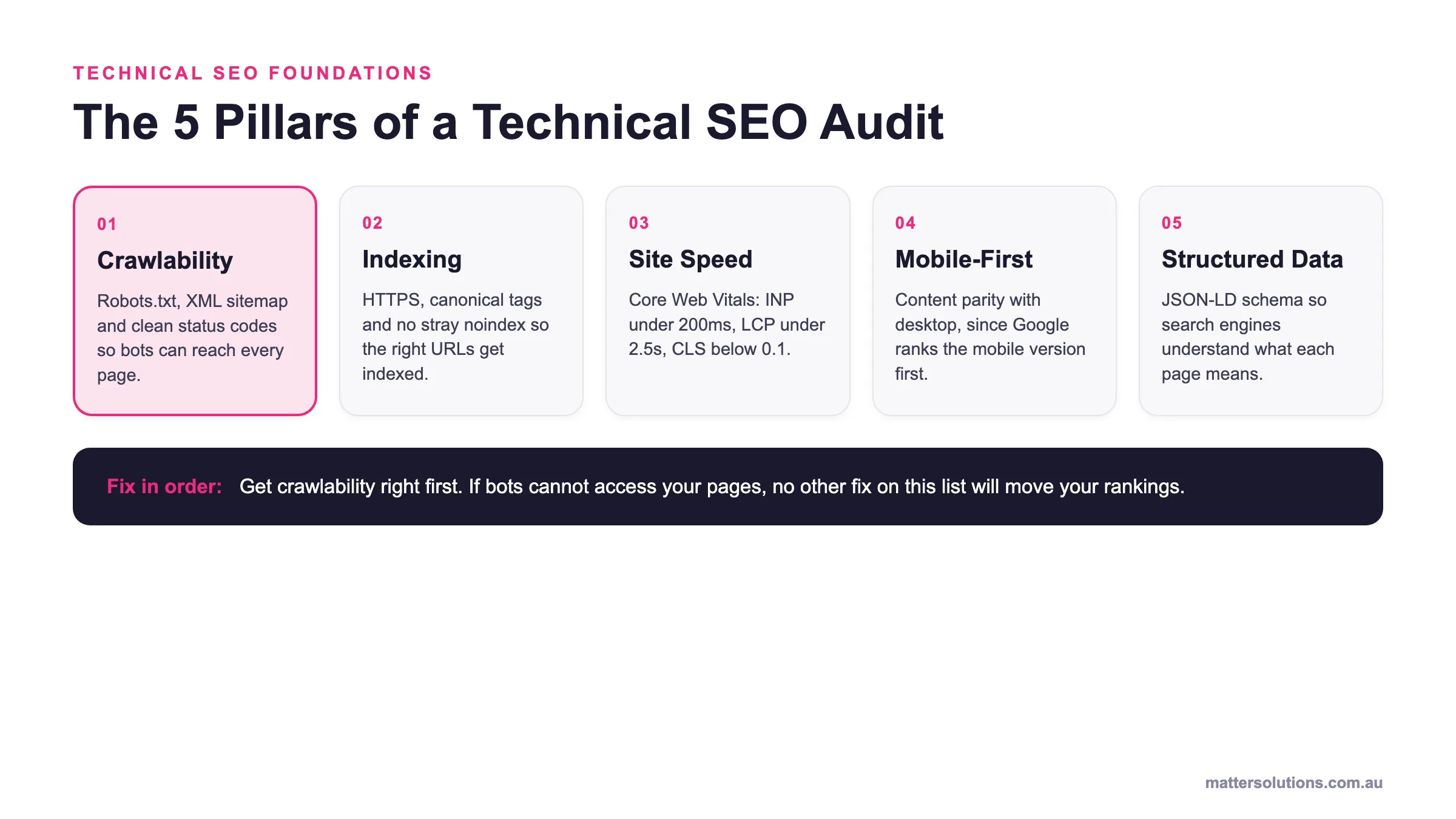
Technical SEO handles the side of your site that most people never see. It covers technical elements like:
- Site speed
- Mobile-friendliness
- Structured data
- XML sitemaps
- How cleanly search engines can crawl and index your pages
These technical factors determine whether crawlers can even find your content in the first place. If they don’t work properly, the rest of your SEO effort loses traction (and Google won’t wait around for you to fix it).
What Does On-Page SEO Cover?
On-page SEO covers everything on your site that you can directly edit and optimise for algorithms, such as page titles, headings, content, internal links, image alt text, etc. Take a look at the three on-page areas that are the most important.
Heading Tags and Why Google Notices Them
Heading tags (H1 and H2) signal content hierarchy to search engines, so the structure of your web page tells them just as much as the words on it. A well-organised heading structure makes pages easier to scan, both for users and for Google crawling your site (a surprisingly common issue, even on established sites).
On the other hand, misusing them, like stacking multiple H1s or skipping heading levels entirely, dilutes your keyword signals. It leaves the algorithm unsure of what your page really covers.
Metadata: Titles, Descriptions, and Click-Through Rates
Well-optimised metadata pulls in the right target audience, while a weak one gets scrolled past. Meta titles, title tags, and descriptions are the first things users see in Google search results, after all.
Meta descriptions don’t directly affect SEO rankings, but they drive click-through rates. And more clicks signal to search engines that your web page is worth appearing higher.
Content SEO and Keyword Placement Done Right
Content search engine optimisation means creating content that answers search intent with the right keywords placed where they’re needed.
As an example, specific keywords in your H1, opening paragraph, and subheadings help search bots understand the page topic more clearly than the same words buried at the bottom of a page.
We often see that thin or poorly structured website content is a common reason pages fail to rank. Both content SEO and on-page optimisation suffer when keyword placement feels forced rather than natural. In short, quality content, written with clear intent, is what separates web pages that appear higher from those that don’t.
Technical SEO Explained: What Happens Behind the Scenes
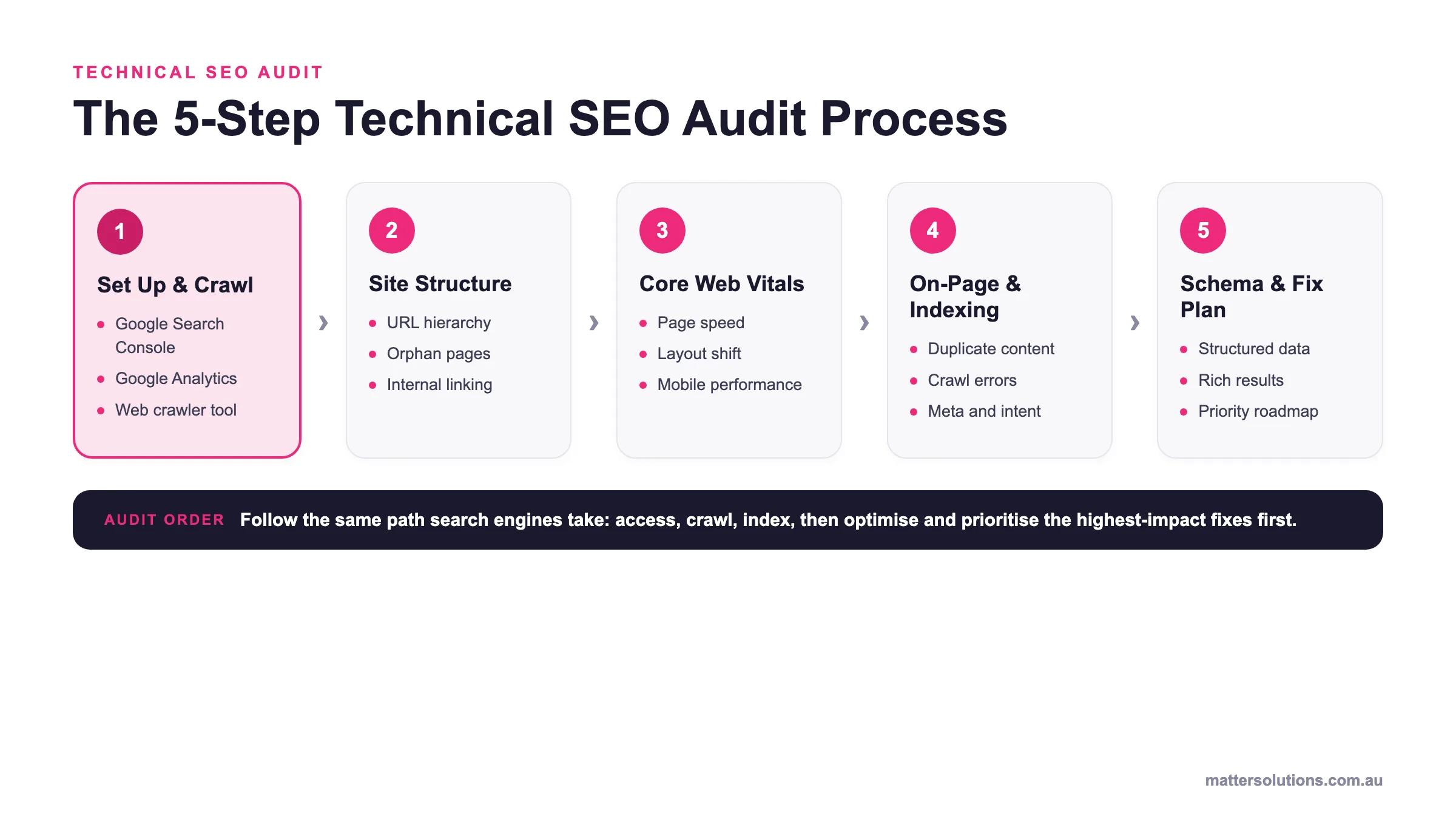
Only 33% of websites pass Google’s Core Web Vitals threshold, and that’s just one of the hurdles most sites fail. Technical SEO is the part of search engine optimization that keeps your site healthy at the foundation level, so everything built on top of it holds up. Below is what it covers.
Core Web Vitals, Site Speed, and Mobile-Friendliness
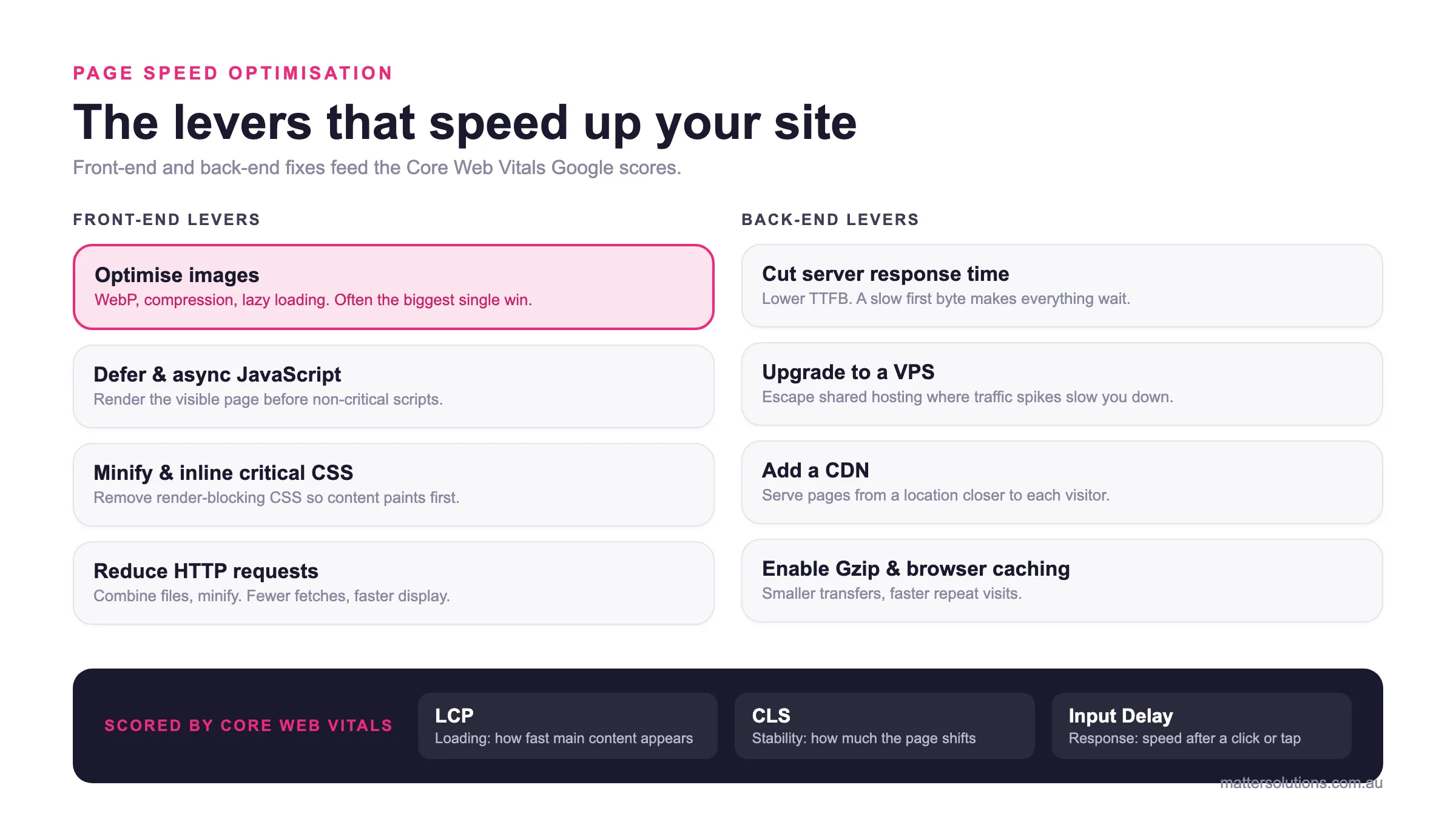
Core Web Vitals are a set of three specific signals search engines use to measure user experience: page speed, interactivity, and visual stability. For instance, Largest Contentful Paint measures how quickly the main content of a web page loads, and a slow result here directly affects SEO rankings.
After auditing sites across a range of industries, slow load times are one of the first issues we flag. It’s because Google’s algorithm treats page speed as a direct ranking factor.
Mobile friendliness is just as important as site speed. A mobile-friendly site performs better given that Google now indexes the mobile version of your site first across all mobile devices.
Internal Links: How They Guide Search Engines
Every connection you create silently works in the background, and internal links are what connect your pages. They pass authority signals across your entire site and help crawlers discover new content. This way, Google understands your site structure and decides which pages deserve the most weight in result pages.
When you don’t have a clear internal linking plan, you’re relying on guesswork instead of a structured SEO strategy. As a result, search engines may never find or index orphaned pages (the ones with no links pointing to them) properly.
That’s why it pays to audit these regularly, since broken links and dead ends are factors affecting how well the algorithm can crawl a site.
Sitemaps, Robots.txt, and Duplicate Content
An XML sitemap tells search bots which pages exist on your site and which ones should be crawled. This makes it one of the more straightforward technical optimizations you can apply. Robots.txt works alongside it and controls which areas of your site search engines are allowed to access.
Duplicate content, however, creates a different problem. It splits ranking signals across multiple pages, so Google struggles to decide which version to show in search results.
Schema markup and structured data help on this front too. They give crawlers better context about your content and improve your chances of earning rich snippets.
Can Technical SEO Issues Hold Back Your Rankings?
Yes, technical SEO issues can hold back your visibility, even when your content is strong. Moreover, search engines may struggle to crawl, index, or understand your pages correctly.
Three technical problems come up repeatedly across sites of every size:
- A Technically Broken Site Blocks Indexing: A site with crawl errors, broken links, or misconfigured robots.txt settings can prevent Google from indexing your pages entirely. Good content, blocked from the algorithm, simply doesn’t gain visibility. And you won’t always know it’s happening until you run a proper audit.
- Slow Load Times: Page speed is a confirmed ranking factor. As page load time increases from 1 second to 10 seconds, the probability of a mobile visitor bouncing increases by 123%.
- Poor Mobile Experience: Besides the speed, even well-written pages sit on page three simply because the technical groundwork wasn’t there. Small issues across site structure, indexing, and page experience can limit how much visibility strong content receives.
- Technical Issues Often Outweigh New Content: Publishing new pages on a technically weak site is like investing in content that search engines may struggle to access or index. When you resolve technical SEO problems first, it gives your existing pages a better chance to appear higher on the first page of Google search results.
Technical SEO isn’t something to revisit once a year and forget about. It’s because Google updates its technical factors and requirements regularly, so what passed an audit 12 months ago may not hold up today.
How Off-Page SEO Works in Digital Marketing
Off-page SEO is where your site’s reputation is built. Unlike on-page SEO, you’re not editing anything on your site directly. Instead, you need to build signals across the web that point back to it (your content can only do so much on its own).
Content marketing and digital PR are two ways to earn quality backlinks, because they give other sites a genuine reason to reference your work. Other search engines follow similar logic too, so a strong off-page presence compounds across platforms.
User engagement plays a role in off-page SEO as well. When people share your content, mention your brand, or link to your pages without being asked, it signals to Google that your site is worth ranking.
On-Page SEO, Off-Page SEO, or Technical SEO: Where Do You Start?
All three pillars are important, but putting effort into the wrong one first means slower results and wasted budget. Most sites need to lay the groundwork before anything else, and that starts with a technical SEO audit.
Here’s a practical order that works across most sites:
- Start with Technical SEO: A technical audit reveals whether search engines can access and crawl your site properly. Responsive design, mobile-first indexing, optimising images, alt text, and URL structure all fall under this first sweep.
- Move to On-Page SEO Next: Once the technical side is sorted, on-page SEO gives you the clearest path to better performance. Content SEO, keyword placement, and on-page optimisations all compound on a technically sound site, so the returns come faster than usual.
- Build Off-Page SEO Down the Track: Off-page SEO delivers returns once your site has clean technical foundations and solid content in place. A backlink pointing to a fast-loading, well-structured page converts that link equity into actual ranking movement.
Put simply, all the elements of SEO work best in sequence. Search engine optimization delivers the best results when each pillar supports the next. The confusion surrounding where to start clears up quickly once you treat them as a system rather than separate tasks.
Ready to Stop Guessing and Start Ranking?
SEO and technical SEO work together to improve search visibility, but they focus on different parts of the process. A successful SEO strategy needs both. Strong content, well-targeted keywords, and quality backlinks can only deliver their full value when they are supported by a technically sound website.
The best move is to audit your technical foundations first, then build your on-page content, and grow your off-page presence from there. That sequence gives every web page the best possible chance of appearing in search engine results and pulling in more visitors over time.
If you’re not sure where your site stands, Matter Solutions works with businesses across Australia to identify what’s holding their rankings back. Reach out today, and we’ll take a proper look.
Frequently Asked Questions About SEO and Technical SEO
Search engine optimisation comes with a lot of moving parts, and it’s natural to have questions once you start getting into the details. These are the ones we hear most often.
What Does Structured Data Do for SEO?
Structured data, implemented through schema markup, helps search engines understand your content better. It doesn’t directly boost search rankings, but it improves how pages appear in Google search results through rich snippets like star ratings and product details.
Does Off-Page SEO or On-Page SEO Have a Stronger Effect on Rankings?
Both content SEO and off-page SEO are important, and neither works well without the other. On-page SEO builds the foundation, while off-page signals push web pages into more competitive search engine result pages.
Can a Business Owner Handle Technical SEO Themselves?
Some technical aspects are manageable, like submitting an XML sitemap or fixing broken links. More complex technical requirements, like browser caching or Core Web Vitals optimisation, are worth handing to a specialist.
Need help with your digital marketing?
Book a free strategy call and let's discuss your goals.
Book a Strategy Call