Picking the best e-commerce website builders in 2026 isn't as simple as going with the cheapest option. Every platform has different strengths, and the wrong choice can slow your online store down before you even install it.
At Matter Solutions, we've spent years helping Australian businesses build and grow their online presence. We know what separates a capable e-commerce platform from one that holds you back.
Drawing from that experience, we'll share:
What every solid e-commerce website builder needs
The 10 best website builders compared side by side
What these platforms cost
So if you're launching your first online store or reconsidering your current setup, the answers are right here.
What Should a Good E-Commerce Website Builder Do?
A good e-commerce website builder should make it easy to create, manage, and grow an online store with reliable marketing features.
Here are some key features every e-commerce website builder should cover:
Ease of Use: A drag-and-drop editor lets you build an e-commerce site without coding knowledge or any technical experience. You only drag, drop, and publish, which covers the whole website-building process for most small businesses. Good builders also let you customise templates to match your existing brand without any design experience.
Payment Gateways: Customers won't use the same payment portal, so your checkout shouldn't be limited. Having multiple payment options, including Stripe, PayPal, and major credit cards, is a standard expectation from any solid e-commerce store builder.
Free Plan Availability: Some builders offer a free plan, which gives you room to test the platform properly before spending anything. Use that window to check if the interface fits how you work, instead of how it performs in a demo.
Inventory and Order Management: Tracking stock, managing physical products, and processing orders from one central dashboard keeps your operation running cleanly. Built-in e-commerce tools at this level save small business owners hours of admin work every week.
App Integrations: A user-friendly site builder connects to your marketing tools, Google Analytics, blogging tools, and third-party services without requiring custom development work. Those integrations help your ecommerce store fit naturally into the broader systems your business already relies on. Strong app integrations are what make that connection possible without extra technical effort.
The web editor is only one piece of building an e-commerce site. The best website builders should handle your payments, stock levels, SEO, and customer data without pushing you toward five separate subscriptions to fill the gaps.
Which Are the Best E-commerce Website Builders in 2026?
The ten best e-commerce website builders each serve different business needs, budgets, and experience levels. We'll explain all of them below for your understanding.
1. Shopify: Is It Worth the Price Tag?
From our conversations with e-commerce site builders, Shopify earns its reputation as the best e-commerce website builder for scaling online stores. Payment processing through Shopify Payments removes transaction fees entirely.
For businesses planning to scale, Shopify provides:
However, the platform demands considerably more setup time upfront (which explains why so many first-time store owners start on Wix and make the shift later).
2. What Makes Wix a Top Pick for Beginners?
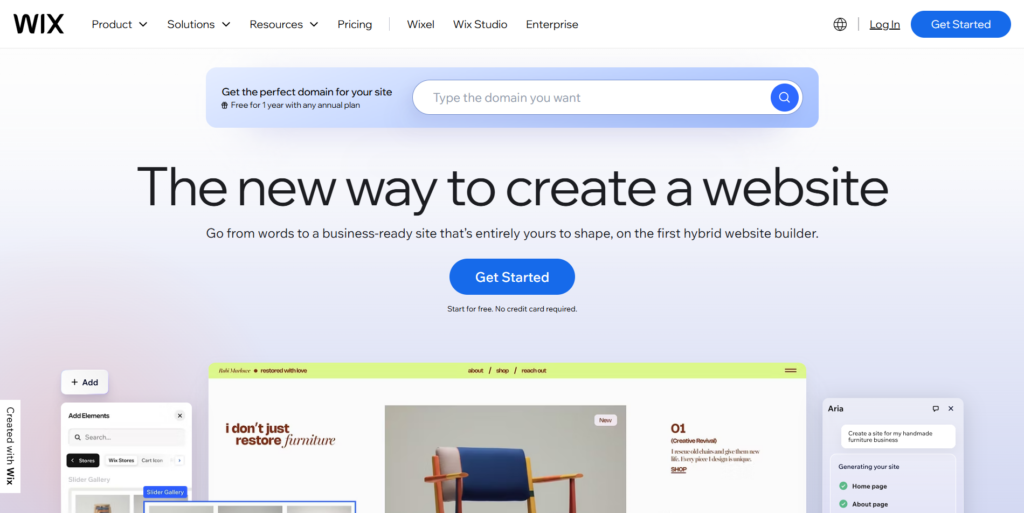
Among e-commerce website builders, Wix stands out for combining a user-friendly drag-and-drop editor with a capable set of e-commerce features. This platform offers:
Free custom domain included on all paid plans
Wix Harmony AI assists with design and content
Booking tools built in alongside e-commerce features
What's more, Wix does not charge an additional platform fee on e-commerce transactions. Instead, merchants pay the payment processing fees charged through their selected payment provider, such as Wix Payments.
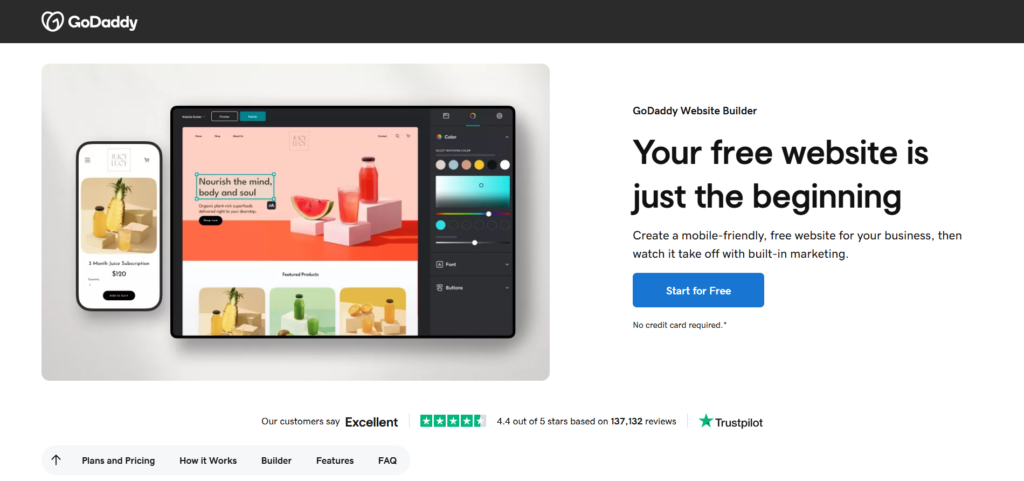
Typically, speed is what separates GoDaddy from most other e-commerce website builders. Its AI-assisted setup can get a business website live faster than almost any competitor. You'll also get multichannel selling acrossAmazon,eBay,Etsy, and social platforms included on the Commerce plan.
The 24/7 customer support is reliable too, which helps small business owners troubleshoot issues without a dedicated IT team.
4. Squarespace: Service or Creative Businesses Selling Online
Based on our experience building e-commerce websites for clients, Squarespace is the strongest pick for service businesses selling digital products or booking services online. It's well-suited for content-driven e-commerce without needing extra plugins, as it has:
Built-in SEO tools
Analytics tools
Product description and blogging tools
User-friendly design templates
Not to mention, client management tools, Google Analytics integration, and customer data tracking are all available within the platform.
For creatives who want their site to perform well in search engine optimisation, Squarespace delivers strong SEO capabilities without the overhead of a more complex e-commerce website builder. It also enables users to reflect their brand identity without compromise.
5. How Square Online Handles Free Plan Selling
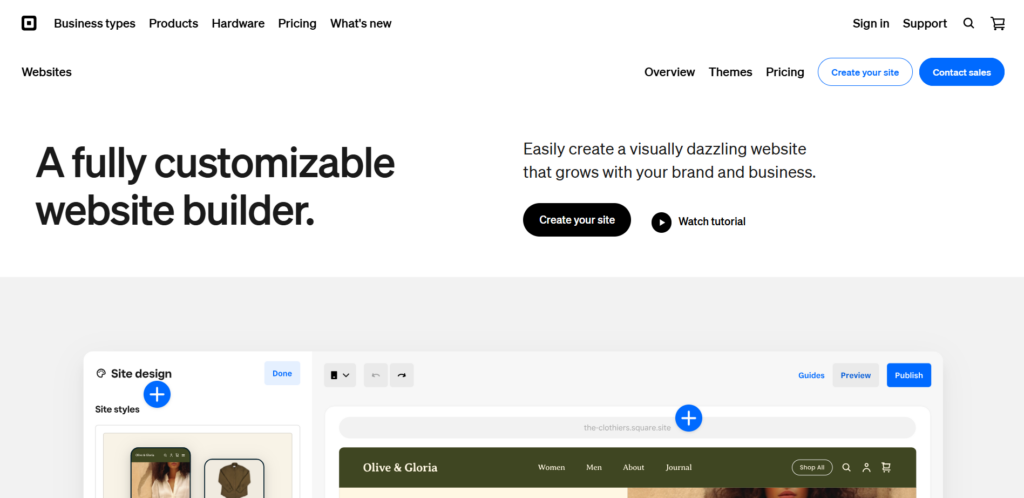
Unlimited products on a free plan are rare among e-commerce website builders. Square Online delivers that alongside a genuine POS (Point of Sale) integration that most competitors don’t offer.
Businesses already using Square in person get a smooth bridge to online selling without migrating to a new system entirely. Moreover, upgrading to the Plus Plan drops online transaction fees and unlocks stronger site management tools.
6. Why Hostinger Works for Budget-Conscious Sellers
The value proposition here is unusually strong. At the time of writing, Hostinger's Business Website Builder starts at $3.99 per month on a 48-month term and includes:
A free domain for the first year
AI tools, including AI Writer, AI SEO Assistant, and AI Heatmap
Ecommerce features with zero Hostinger transaction fees
Most platforms charge separately for at least two of those. That's why Hostinger suits small stores wanting a clean, low-cost setup without compromising on the tools needed to sell products online.
7. WooCommerce: Full Control on Your Existing Site
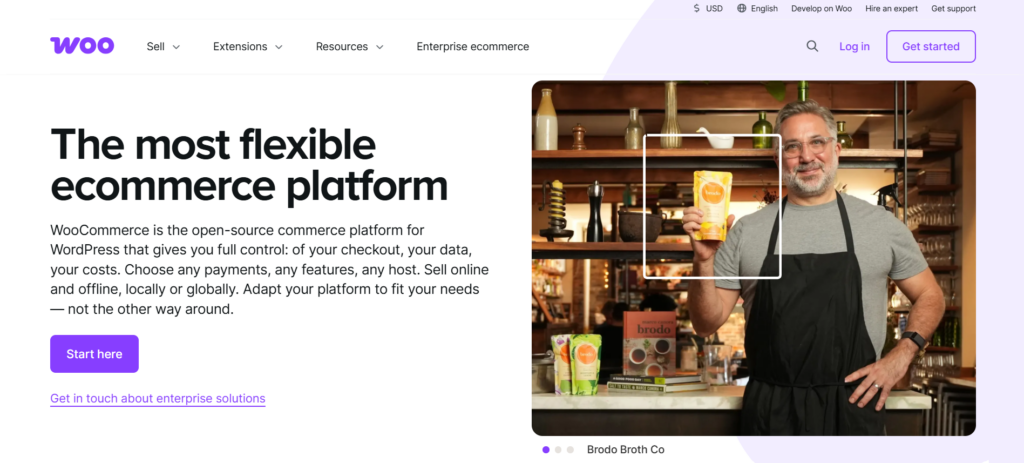
No other e-commerce solution on this list gives you the same level of ownership over your store. Since WooCommerce runs as an open-source plugin on your existing WordPress site, every design decision, checkout flow, and customer data point stays entirely in your hands.
There are also no platform transaction fees regardless of which payment gateways you use.
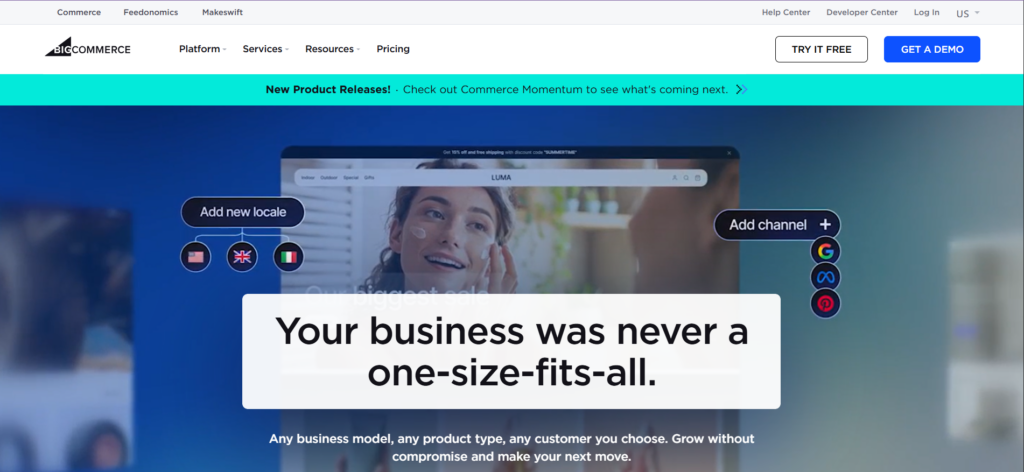
8. BigCommerce: Solid E-Commerce Website Creator
Advanced e-commerce tools like real-time shipping quotes, bulk pricing rules, and faceted product search come built into BigCommerce's plans without needing paid apps. That keeps your monthly overhead lower than it would be on comparable Shopify tiers at scale.
These are the basic features:
Support for a wide range of payment gateways
Multichannel selling is built in across all plans
Real-time shipping quotes without third-party apps
Faceted product search included on higher tiers
It's worth noting that BigCommerce enforces revenue-based upgrade thresholds, so your plan tier will rise as your business grows.
9. Ecwid: Add a Store to Any Existing Website
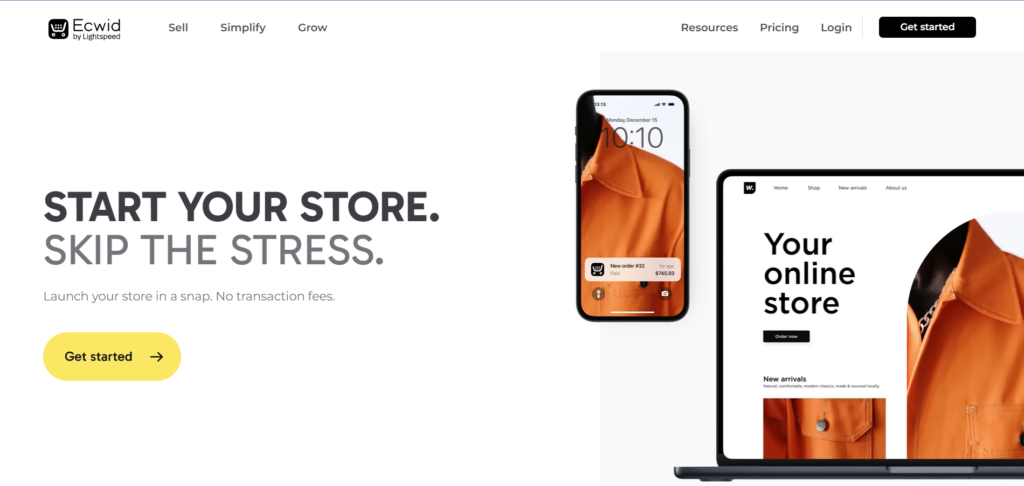
Ecwid's core advantage is portability. Rather than rebuilding your site from scratch, you embed a fully functional store into any existing website, and it inherits your existing design automatically.
Plus, customers never leave your domain during checkout, which keeps the experience consistent and reduces drop-off overall.
10. Big Cartel: The Free Plan Built for Makers
Big Cartel strips away everything that independent creators don't need and keeps the things they do. The free plan supports five products with zero transaction fees and a custom domain included.
Its product-focused dashboard, simple order management, and clean storefront templates are built specifically for artists and makers.
The 10 Best E-commerce Website Builders at a Glance
Not all of the platforms are built with your specific e-commerce company in mind. But you can choose the right one considering your budget, your technical comfort level, and how much room your online store needs to scale.
So for your convenience, let's take a look at how all ten of the best website builders compare in this table:
Disclaimer: Pricing is in AUD and subject to change. USD prices apply where no AUD page exists, and all prices exclude GST. Since exchange rates fluctuate, always check each platform's current pricing page before committing.
Choosing an E-commerce Builder That Fits Your Business Best
Working across hundreds of Australian small business websites, we've seen firsthand how often the wrong builder choice sets a store back by months. What works well for a solo maker running a basic web store won't hold up for an e-commerce store processing thousands of orders a month.
Here's how to find the best website builder based on your specific business type.
New or Small Businesses: Where to Start
Among the modern e-commerce platforms, Wix, Squarespace, and Hostinger are all strong starting points for new small business owners. Each one provides a great set of business tools, which you can use without going through a steep learning curve.
Square Online is also worth considering as an online store builder option for businesses wanting to shop online before committing to a premium plan.
Growing Stores That Need Room to Scale
Shopify and BigCommerce are the right website builder picks when a business grows and needs powerful e-commerce features that entry-level platforms can’t afford. For instance, a fashion retailer adding more product catalogue may need advanced inventory management and site controls that are built into the platform.
Both platforms are built specifically for that kind of growth. And most businesses can scale into them steadily as their e-commerce store expands, without needing to switch to a different store builder.
Ready to Build Your E-commerce Site?
Every builder on this list does something specific for your business. Shopify and BigCommerce suit e-commerce stores built for serious growth. Some platforms are designed for simplicity, while others offer the advanced tools needed to manage more complex operations.
Fortunately, there are strong options for every stage of business growth. So take the time to compare features, pricing, scalability, and ease of use before making a decision. You can also start with a free trial where one's available. That way, you can test if the features truly fit your online business before you spend a few hundred dollars.
If you'd like guidance from expert e-commerce website creators and want solutions for your business online, visit us. Matter Solutions has been helping Australian businesses build and grow their online presence.
Choosing the right e-commerce website builder raises plenty of questions, especially when the best website builders on the market look similar on the surface. These are the ones we hear most often from business owners starting out.
What Is the Best E-commerce Website Builder?
Shopify is the best e-commerce website builder for most online stores, particularly those focused on growth and high product volumes. However, Wix is the stronger pick for small businesses that want a user-friendly setup and the best website-building tools at an affordable price.
Is Shopify Better Than WooCommerce?
Compared to WooCommerce, Shopify offers a simpler website creation process for many small business owners. It provides a ready-to-use e-commerce platform, so there's no need to manage web hosting separately.
Meanwhile, WooCommerce gives you more control and flexibility as a full e-commerce solution, but only if you're comfortable working with an existing WordPress site. And you have some technical skills to go with it.
Is Shopify Open-Source?
No, Shopify is a fully hosted, proprietary e-commerce platform. This means it handles the infrastructure, security, and updates on your behalf.
For most small business owners, Shopify's closed system is a benefit since it removes the technical overhead of managing their own site entirely.
Ben Maden founded Matter Solutions in April 2000 and remains the Lead Web & SEO Consultant today. While Matter Solutions originated in London, UK, the company took on Australian clients when Ben emigrated to Brisbane in November 2006.