Email marketing averages $36 back for every $1 spent, and direct mail sits at a median ROI of 112%. In practice, those numbers appear when a well-targeted message reaches the right audience through a channel that suits them.
Direct marketing does exactly that. It skips the wide broadcast and speaks to a defined group with a tailored offer. Here, every response ties back to a decision you made before the campaign launched. Mass advertising simply cannot give you that kind of visibility.
This article will cover what direct marketing is and how it works. We’ll also show you:
- The ten main types of direct marketing and when each one fits
- What makes a campaign successful
- And the Australian laws you need to know before you begin
So keep reading on, and we will cover each one.
What Is Direct Marketing?

Direct marketing is any form of communication aimed at a specific person or group, with a clear ask and a measurable outcome attached. Unlike brand advertising, there is no middleman and no broad audience. Here, the business speaks directly to a pre-selected group of people.
That definition covers a lot of ground, so let’s break down the core elements first, then look at how direct response marketing fits in.
The Core Elements of Direct Marketing
Successful campaigns are built on a clear structure. At its core, direct marketing has four elements:
- A defined target audience
- A direct channel
- A specific offer
- And a way to measure the response
In this approach, there is no intermediary. Instead, the business communicates directly with the people it has already identified as relevant through one-to-one or one-to-many meetings.
Basically, every campaign is built around a specific action you want the recipient to take. Not just awareness, not general exposure, but rather a response you can rely on. That focus on measurable outcomes is what sets direct marketing apart from traditional brand advertising.
What Is Direct Response Marketing?
It is a form of direct marketing, but built entirely around prompting an immediate, trackable action. You have probably seen these without realising. For instance, an ad that says “call now,” or an email with a 48-hour offer, or maybe a postcard with a QR code. These are what’s called direct response marketing.
Here, every message includes a mechanism for the recipient to respond straight away. Say, a toll-free phone number, a link, a coupon code, or a form. Also, every single response is tracked, so you always know exactly what the campaign produced.
What Are the Types of Direct Marketing?
There are ten main types of direct marketing, including email, SMS, door-to-door selling, and paid search. Each one offers a fresh way to reach potential customers and a wide array of formats to suit different audiences and budgets. Usually, businesses find two or three that suit their audience and goals better than the rest.
Let’s run through each one.
1. Email Marketing
Email is one of the most cost-effective direct marketing channels as it works through opt-in subscriber lists. Businesses use these lists to send personalised offers, newsletters, and promotions directly to people who have already shown interest.
Here’s why it’s a strong starting point for most businesses:
- Low cost to send at scale
- Easy to automate and personalise
- Real-time tracking of opens, clicks, and conversions
- Simple to A/B test subject lines and offers
Plus, email gives you a feedback loop that most other channels cannot. It is also one of the best ways to stay connected to your existing customers and build customer loyalty over time.
To make the most of it, you have to create a high-quality subscriber list, craft compelling subject lines, and reach people who are genuinely interested in your messages.
2. Direct Mail
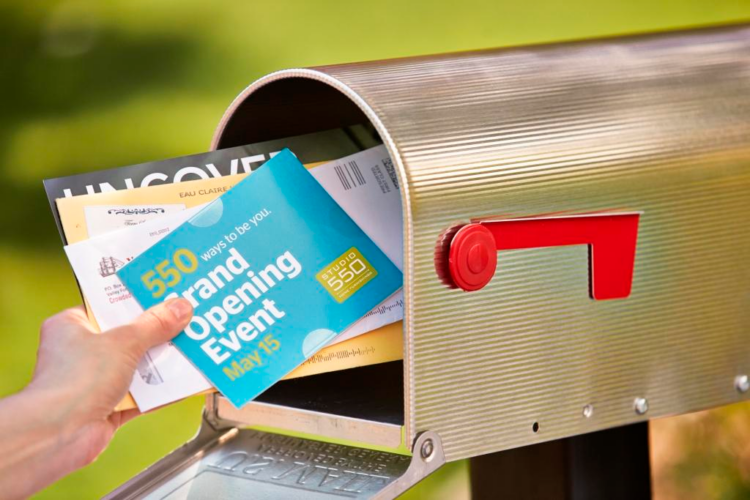
Physical promotional material, including postcards, letters, and brochures, is sent directly to a prospect’s postal address via the postal service. In fact, direct mail achieves an average open rate of 80 to 90%, which is significantly higher than email’s 20 to 30%.
A few reasons businesses still rely on it:
- High open and read rates compared to digital channels
- Less competition in the physical letterbox than in the inbox
- Works well paired with a digital follow-up campaign
And frankly, the physicality of direct mail is what gives it power. Say, a well-timed mailer sitting on someone’s kitchen bench gets seen more than once, and that repeated exposure sells your business. But can’t guarantee impact of the message, similar to email marketing, they might directly go in the bin.
3. SMS Marketing
Short message service (SMS) has one of the highest open rates of any channel. And the best part is, 90% of messages are read within three minutes of landing. It works best for flash sales, appointment reminders, and location-based offers where timing is important.
Take a look at why it suits businesses that need fast, direct contact with their audience:
- Near-instant delivery and open rate
- Low production cost with no design assets required for standard campaigns
- Ideal for time-sensitive or location-specific promotions
Quick Tip: The main thing to keep in mind here is brevity. It’s because SMS is effective when it is short and direct, so the moment your message starts to ramble, you lose the reader.
4. Telemarketing

Direct phone contact can be inbound (customer-initiated) or outbound (cold calling via phone calls), and each format requires a different script and approach.
In Australia, outbound telemarketing is heavily regulated under the Do Not Call Register Act, so screening your call list before any campaign launches is essential.
This is where telemarketing still holds its ground:
- Allows real-time conversation and objection handling
- Immediate feedback on whether the offer resonates
- Strong for high-value products that need explanation
Note: It might not be the right fit for every business, though. But it remains one of the most direct options available for high-ticket services where a conversation closes the deal.
5. Social Media Direct Ads
Paid ads on social media platforms like Meta, LinkedIn, and Instagram target specific audience segments. Unlike organic posts, direct ads push your message to people who have not chosen to follow you yet.
The formats usually include sponsored posts, stories, and mobile banner ads served across mobile applications. You can also choose from specific targeting options, like demographics, interests, behaviours, job titles, and custom or lookalike audiences. So your spend goes toward the people most likely to act.
You also get these flexibilities in this channel:
- The visual format supports a strong creative impact
- Budget scaled up or down in real time
- Performance data available immediately after launch
Overall, direct advertising on social media is particularly strong for businesses with longer sales cycles.
6. Door-to-Door and Direct Selling
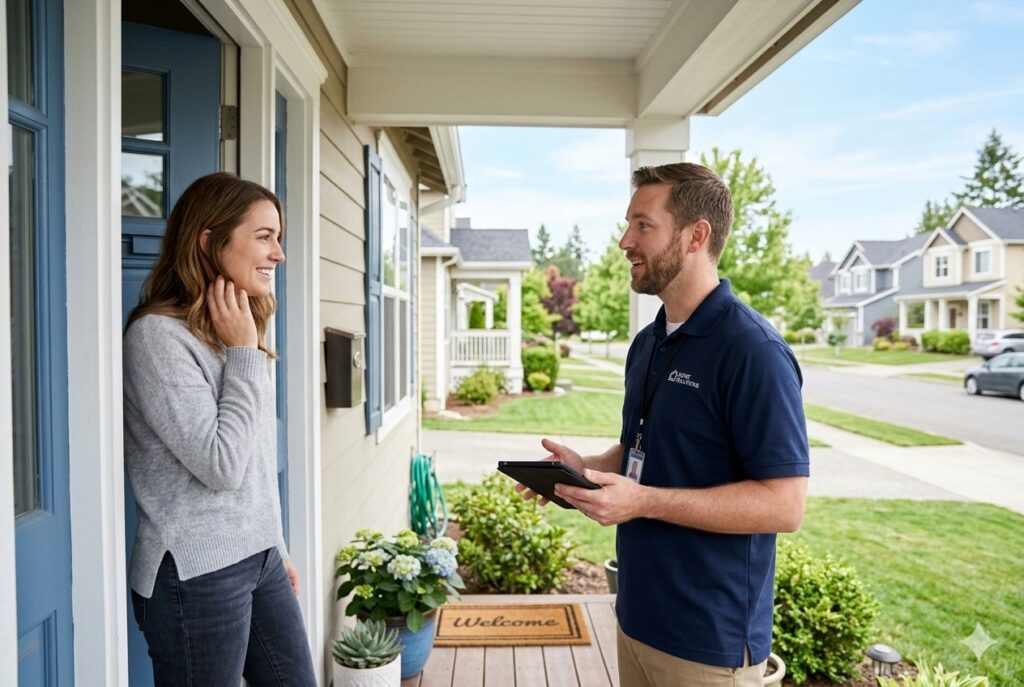
This is one of the oldest forms of direct marketing, and it is still used widely in industries like solar, insurance, and real estate. Here, a sales representative visits prospects in person to demonstrate and sell goods or services.
Below, you’ll see why it still performs well in specific contexts:
- Face-to-face interaction builds trust quickly
- Live product demonstration increases conversion
- No digital infrastructure or list required to get started
In practice, door-to-door works best when the product needs to be seen or experienced to be understood.
7. Catalogue Marketing
Digital catalogues have extended the channel to online, so customers can now click through to product pages and purchase directly. These work especially well for retail, wholesale, and B2B businesses with a broad product range.
This is what keeps this channel relevant for product-heavy businesses:
- It showcases a full product range in one place
- Long shelf life, with physical catalogues kept and referenced repeatedly
- Digital versions are low-cost to produce and easy to distribute
Beyond these practical benefits, catalogues give customers the room to browse at their own pace. And that unhurried experience can produce higher average order values than a fast-moving ad ever could.
8. Paid Search Advertising

Google Ads is the dominant platform for this marketing channel. There, you pay per click with targeting based on what people are actively searching for. It is actually a high-intent channel because the prospect is already looking for what you offer. Which is why conversion rates generally run higher than most other channels.
Here is why it sits at the top of the list for many businesses:
- The ad reaches people who are actively searching for your product or service
- You pay only when someone clicks, so no spend goes toward passive viewers
- Results are immediate once the campaign launches
- Full control over budget, targeting, and messaging at all times
Bonus Tip: The businesses that get the most from paid search are the ones that pair it with strong landing pages. That’s how the ad gets the click, but it’s the landing page that convinces them to take action. In simple terms, you make more money from the same ad budget.
9. Kiosk and Event Marketing
This is basically creating a physical presence, such as a stand, kiosk, or pop-up. You set up in a high-traffic location to engage prospects directly (commonly in shopping centres, trade shows, markets, and community events).
The channel is built for businesses that benefit from real-world interaction. Take a look at the reasons:
- Direct access to a high volume of foot traffic
- Immediate lead capture on the spot
- Strong for building local brand awareness quickly
Furthermore, customers who interact with your brand face-to-face often remember it longer and convert at a higher rate than those who only see it online.
10. Flyers and Leaflet Distribution

Flyers are a low-cost entry point for local businesses wanting to reach a specific area quickly. For instance, grand openings, local promotions, and service businesses that target a defined suburb or postcode.
The advantages of flyers are straightforward:
- Very low production and distribution cost
- Highly targeted by geography at street, suburb, or postcode level
- No digital literacy required from the recipient
- Easy to include trackable coupons or QR codes for measuring response
Sometimes the oldest tools hold up precisely because they are simple and they land in the right hands. And this is one of the few channels where a small budget can still produce a strong local result.
Does Direct Marketing Actually Work?
After working with businesses across a wide range of industries, we’ve seen that the campaigns that perform well are the ones built around a defined audience and a clear offer.
That said, not all channels are equally effective. For example, direct mail produces the highest median ROI at 112%, followed by:
- SMS at 102%
- Email at 93%
- Paid search at 88%
- Social media advertising at 81%
However, the best strategy is to combine channels to make a compounding effect. So when a prospect sees your message more than once across more than one format, the likelihood they take action increases significantly. This is something we often experience while tracking campaign results for clients in competitive Australian markets.
Did You Know? According to Merkle, marketing campaigns that combined direct mail with at least one or more digital channels saw a 118% higher response rate compared to direct mail alone (and the more channels you add, the more this compounds). On top of that, the strongest campaigns use one channel to prime the audience and a second to close.
The Pros and Cons of Direct Marketing
Is direct marketing right for every business? Not always. Like any channel, it has solid strengths, but also significant limitations. And knowing both helps you decide where to invest.
Let’s look at each side objectively.
The Pros
The greatest advantage of direct marketing is control. With this, you can choose who sees your message, what it says, when it goes out, and how you can measure the result. That level of visibility is something broad media advertising simply cannot give you.
Take a look at what makes it worth considering for most businesses:
- Highly Targeted: You reach people who are most likely to buy. Over time, it cuts wasted spending on uninterested audiences.
- Personalisation At Scale: Modern marketing tools let you tailor messages to individual behaviour, location, or purchase history. As a result, your communication becomes more relevant, increasing engagement and improving response rates.
- Cost-Effective For Small Businesses: Channels like email and letterbox drops are a cost-effective way to generate new customers compared to broadcast media.
Ultimately, the businesses that get the most from direct marketing are the ones that treat targeting as a discipline, not an afterthought.
The Cons
No strategy works perfectly in every situation or for every audience. That’s why understanding the limitations helps you decide when to combine it with other approaches.
Here are the constraints of direct marketing you need to consider:
- The channels can be perceived as spam when poorly targeted or sent too often, which can damage brand reputation
- Direct marketing speaks to a defined list, not the broad audience that mass media can reach
- If your contact list is two years old and nobody has cleaned it, many addresses are likely outdated before the campaign even launches
- Failing to comply with Australian privacy and spam laws can result in significant penalties
Frankly, most of these risks are consequences of shortcuts. Mostly, businesses that buy cheap lists, skip compliance checks, or blast the same message to everyone see the worst results and carry the most exposure to these penalties.
That takes us to the Australian direct marketing laws you should keep in mind.
Australian Privacy Principles and APP 7
Did you know that APP 7 under the Privacy Act 1988 prohibits organisations from using personal information for direct marketing purposes without consent or a lawful exception?
Currently, businesses with annual turnover above $3 million must comply, but the federal government has signalled the removal of this threshold as part of ongoing Privacy Act reforms. Either way, businesses of all sizes are strongly advised to get compliant now rather than wait.
In short, every direct marketing message must include a clear, easy opt-out mechanism. Plus, individuals who receive direct marketing communications must be able to opt out promptly. If you are unsure whether APP 7 applies to your business today, the Office of the Australian Information Commissioner is the right place to start.
The Spam Act of 2003

If you send marketing emails or text messages in Australia, the Spam Act applies to you. It sets out who you can contact, how you must identify yourself, and how recipients can opt out.
To summarise the Spam Act, it regulates all commercial electronic messages sent for marketing purposes, including emails, SMS, and instant messages. So you must have express or inferred consent before sending anything, and each message must clearly identify your business and include a functional unsubscribe option.
In case of fines, the maximum court penalty sits at $626,000 per day for first-time offenders and rises to $3,130,000 per day for repeat breaches (and the ACMA has shown it is willing to use those powers). Unfortunately, over the past 18 months, businesses have paid over $20 million in spam penalties.
The Do Not Call Register
The Do Not Call Register Act 2006 gives Australians the right to block unsolicited telemarketing calls, and businesses that ignore it face real penalties. It allows individuals to register their numbers to opt out of unsolicited telemarketing calls.
Before running any phone-based direct marketing campaign, you must screen your call list against the register (annoying for some, but the alternative is a lot worse). It’s because calling a registered number without a lawful exemption can result in substantial fines. Plus, not knowing about the register is not a defence, and the regulator treats it that way.
What Goes Into an Effective Direct Marketing Campaign?
A well-run direct marketing campaign does not need a huge budget. Rather, it needs the right list, a clear message, and one strong call to action. And those three things are available to businesses of any size.
Let’s break down what each one actually involves.
A Clear Call to Action
Every effective direct marketing campaign has one thing in common: the recipient will know exactly what to do next. That is the goal of the call to action. For instance, your marketing message needs to encourage one specific action: call now, click here, redeem this code, book today.
On the other hand, vague or multiple calls to action dilute the message and reduce response rates. Which is why targeted messaging works best when it leads to a single, clear next step. The CTA should also be prominent, time-sensitive where possible, and remove any friction from taking the next step.
How to Build and Segment Your Contact List
Your contact list is the foundation of every campaign you run. A clean and well-segmented list will outperform a large, unorganised one every time.
Working across Brisbane businesses, we’ve seen how building your own customer database, rather than buying lists, is one of the most valuable investments you can make across all your direct marketing activities.
You can segment them by demographics, purchase history, location, or behaviour, so each group gets messages that are relevant to them. Meanwhile, poor list quality, with outdated contacts, purchased lists, or unsegmented data, is one of the main reasons campaigns underperform.
Personalisation
Here’s a fact: businesses that personalise their digital experiences see an average 19% increase in sales. That gap between generic and personalised only gets wider as customer expectations rise.
And it goes beyond using a first name. In fact, real personalisation means tailoring the offer, timing, channel, and message to each person’s behaviour (which explains why so many campaigns fail here). Ultimately, the more relevant and interactive the message feels to the recipient, the more likely they are to respond and convert.
Your Next Step With Direct Marketing
Direct marketing is one of the few channels where you can see how your choices affect the results. The list you target, the message you write, the channel you choose, and the laws you follow all determine what you get back.
At the end of the day, the businesses that campaign direct marketing accurately treat it as a discipline, not a one-off. They plan carefully, test consistently, and refine their approach based on results. Over time, this disciplined strategy takes them to higher engagement and better return on investment.
If you want help building a strategy that fits your business and produces solid results, visit our website. The team at Matter Solutions works with Australian businesses across every stage of the process. So get in touch today and let’s talk about new possibilities.
Know any other direct mail campaigns that stood out from the crowd? Let us know in the comments.
Need help with your digital marketing?
Book a free strategy call and let's discuss your goals.
Book a Strategy Call